Balvenie
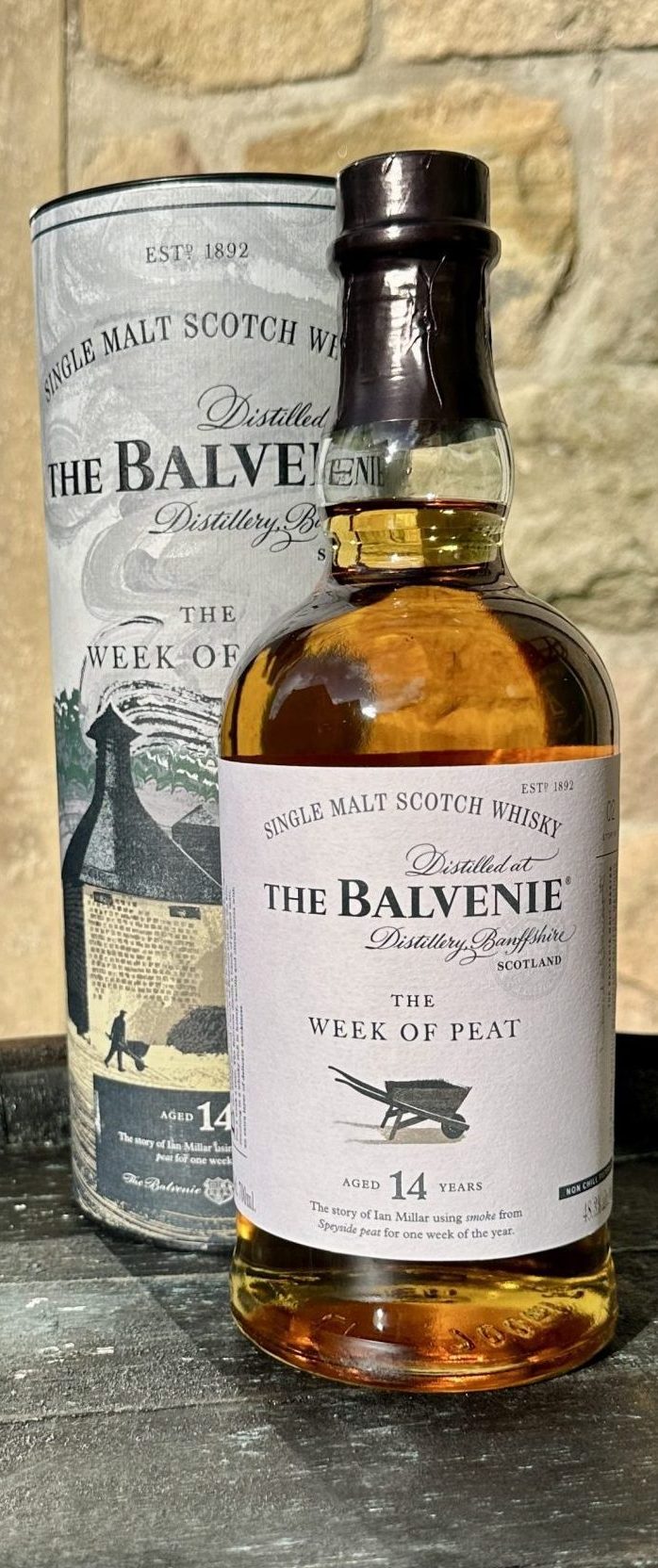
14 Years Old - The Week of Peat
- 48.3
- 70cl
- Taste: 4
- Speyside
William Grant established The Balvenie Distillery in 1892 in Dufftown. After successfully running the Glenfiddich Distillery, he purchased Balvenie New House, a large estate near Glenfiddich, to expand his operations. Production officially began in 1893, initially using second-hand stills from Lagavulin and Glen Albyn distilleries. Originally supplying malt whisky for blended Scotch whiskies, particularly William Grant & Sons', Balvenie released its first single malt in 1971. Known for its commitment to...
Read more
Read more
William Grant established The Balvenie Distillery in 1892 in Dufftown. After successfully running the Glenfiddich Distillery, he purchased Balvenie New House, a large estate near Glenfiddich, to expand his operations. Production officially began in 1893, initially using second-hand stills from Lagavulin and Glen Albyn distilleries.
Originally supplying malt whisky for blended Scotch whiskies, particularly William Grant & Sons', Balvenie released its first single malt in 1971. Known for its commitment to traditional craftsmanship, the distillery is one of the few remaining that still grows its own barley, malts its grain on a traditional malting floor, and maintains its own cooperage and coppersmith.
Today, William Grant & Sons operates the distillery and it continues to be a family-run business. The distillery produces a wide range of single malts, known for their rich, honeyed character.
The story of this bottling is as the name suggests - it is a peaty whisky. In 2002, distillery manager Ian Millar went on a trip to Islay. Ian wanted to make an Islay style of smoky whisky at Balvenie. He noticed a gap in the production schedule, so decided to order some Speyside peat, built a peat burner for the kiln and made peated Balvenie. They do this for one week a year – hence 'The Week of Peat'.
The malt is around 30 Phenols PPM – a little lower than Ardbeg and Laphroig but more than Bowmore. Being Speyside peat from near Fraserburgh, it’s not as medicinal, less seaweed, more moss wood, less iodine. They have to keep the foreshots and feints left over from one year till the next, so each year continues to the next.
Originally supplying malt whisky for blended Scotch whiskies, particularly William Grant & Sons', Balvenie released its first single malt in 1971. Known for its commitment to traditional craftsmanship, the distillery is one of the few remaining that still grows its own barley, malts its grain on a traditional malting floor, and maintains its own cooperage and coppersmith.
Today, William Grant & Sons operates the distillery and it continues to be a family-run business. The distillery produces a wide range of single malts, known for their rich, honeyed character.
The story of this bottling is as the name suggests - it is a peaty whisky. In 2002, distillery manager Ian Millar went on a trip to Islay. Ian wanted to make an Islay style of smoky whisky at Balvenie. He noticed a gap in the production schedule, so decided to order some Speyside peat, built a peat burner for the kiln and made peated Balvenie. They do this for one week a year – hence 'The Week of Peat'.
The malt is around 30 Phenols PPM – a little lower than Ardbeg and Laphroig but more than Bowmore. Being Speyside peat from near Fraserburgh, it’s not as medicinal, less seaweed, more moss wood, less iodine. They have to keep the foreshots and feints left over from one year till the next, so each year continues to the next.
Tasting Rating Guide
1: Light, good for beginners - an aperitif on a summers day, i.e. Glengoyne, Auchentoshan
2: Also good for beginners but with more depth and body - a little stronger than 1, ie. Glenmorangie, Speyburn
3: A dram for everyone, a little more complex so the palate requires a little more experience, i.e. Cragganmore, Macallan
4: A stronger spirit, a big whisky with lots of character and body, excellent after dinner, i.e. Lagavulin, Laphroaig