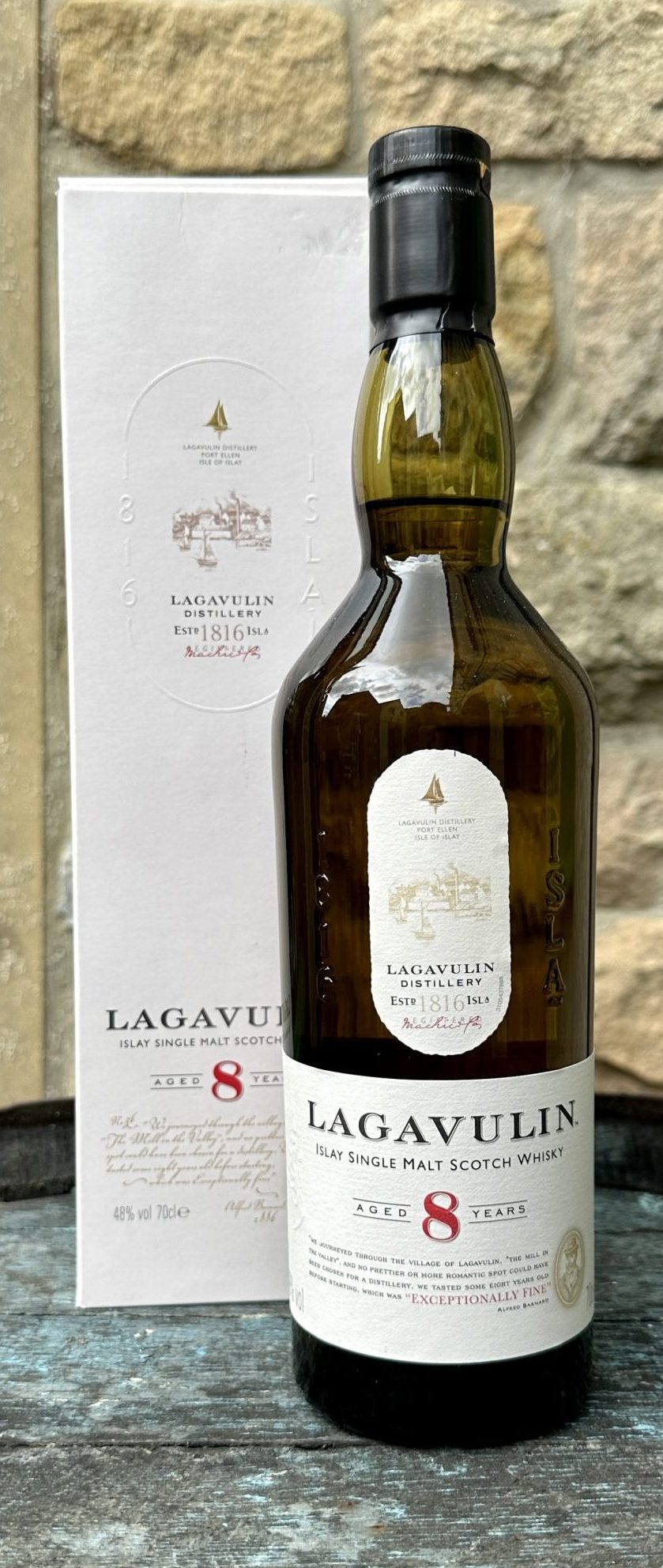
Lagavulin
8 Years Old
- 48
- 8 Years Old
- 70cl
- Taste: 4
- Islay
Lagavulin Distillery, located on the Isle of Islay, dates back to the early 19th century. It was officially founded in 1816 by John Johnston and Archibald Campbell, though there is evidence of illicit distillation on the site as far back as 1742. After Johnston's death in 1835, Alexander Graham took over, followed by his son Walter, and his brother John Crawford Graham. In 1856, James Logan Mackie assumed control, and...
Read more
Read more
Lagavulin Distillery, located on the Isle of Islay, dates back to the early 19th century. It was officially founded in 1816 by John Johnston and Archibald Campbell, though there is evidence of illicit distillation on the site as far back as 1742.
After Johnston's death in 1835, Alexander Graham took over, followed by his son Walter, and his brother John Crawford Graham. In 1856, James Logan Mackie assumed control, and in 1878, his nephew Peter Mackie joined the firm. Peter eventually took over as sole partner in 1889, and in 1895, the business became Mackie & Co (Distillers), blending the famous White Horse whisky.
The distillery went through several ownership changes: after being sold to Peter Mackie in the early 1920s, eventually becoming part of Guinness in 1986. Guinness later merged with Grand Metropolitan to form Diageo in 1997. Noted for its slow distillation process and distinctive pot stills, contributing to its renowned distinctive, peaty single malt Scotch whisky.
Released to commemorate the 200th anniversary of the founding of Lagavulin Distillery, this eight year old is big and smoky. A fragrant, tea-scented smoke alongside nose-drying, maritime aromas, unlocked with just a drop of water. Inspired by the visit of Alfred Barnard to the distillery in the 1880s. He tried an 'exceptionally fine' eight year old from the distillery, this is a fitting tribute for the milestone. A light body that becomes pleasantly oily. The Lagavulin palate boasts a magnificently full-on Lagavulin taste that’s somehow even bigger than you expect.
After Johnston's death in 1835, Alexander Graham took over, followed by his son Walter, and his brother John Crawford Graham. In 1856, James Logan Mackie assumed control, and in 1878, his nephew Peter Mackie joined the firm. Peter eventually took over as sole partner in 1889, and in 1895, the business became Mackie & Co (Distillers), blending the famous White Horse whisky.
The distillery went through several ownership changes: after being sold to Peter Mackie in the early 1920s, eventually becoming part of Guinness in 1986. Guinness later merged with Grand Metropolitan to form Diageo in 1997. Noted for its slow distillation process and distinctive pot stills, contributing to its renowned distinctive, peaty single malt Scotch whisky.
Released to commemorate the 200th anniversary of the founding of Lagavulin Distillery, this eight year old is big and smoky. A fragrant, tea-scented smoke alongside nose-drying, maritime aromas, unlocked with just a drop of water. Inspired by the visit of Alfred Barnard to the distillery in the 1880s. He tried an 'exceptionally fine' eight year old from the distillery, this is a fitting tribute for the milestone. A light body that becomes pleasantly oily. The Lagavulin palate boasts a magnificently full-on Lagavulin taste that’s somehow even bigger than you expect.
Tasting Rating Guide
1: Light, good for beginners - an aperitif on a summers day, i.e. Glengoyne, Auchentoshan
2: Also good for beginners but with more depth and body - a little stronger than 1, ie. Glenmorangie, Speyburn
3: A dram for everyone, a little more complex so the palate requires a little more experience, i.e. Cragganmore, Macallan
4: A stronger spirit, a big whisky with lots of character and body, excellent after dinner, i.e. Lagavulin, Laphroaig